| Cat # | Size | Price | Quantity | |
|---|---|---|---|---|
| 804801 | 25 ug | $145 | ||
| 804802 | 100 ug | $295 |
| Application | ELISA, BLI |
|---|---|
| Format | Liquid, Purified |
| Expression Host | CHO |
| Target Name | IL13RA2, CD213A2, IL-13R, IL13BP |
| Species | Human |
| Sources | Recombinant Human IL13RA2 protein (Cys22-Leu342) with C-terminus Fc-Avi tag is expressed in CHO cells. |
| Accession Number | Q14627 |
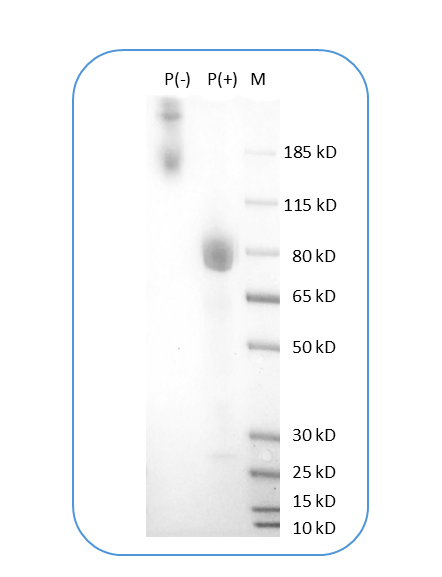
| Molecular Weight | The protein has a predicted molecular weight of 65.7 kDa. Under DTT-reducing conditions, it migrates at approximately 65-80 kDa on SDS-PAGE. |
| Affinity Tag | C-Fc-Avi |
| Purity | >95% based on SDS-PAGE under reducing condition |
| Regulatory Status | RUO |
| Formulation | 1xPBS buffer, pH7.4, 0.22 µm filtered |
| Endotoxin level | Not tested |
| Protein Concentration | 25µg size is bottled at 0.2mg/mL concentration. 100 µg size is supplied at a lot-specific concentration. |
| Storage and Handling | Briefly centrifuge the vial upon receipt. An unopened vial can be stored at 4°C for up to 2 weeks, or at -20°C or below for up to six months. The protein may be further diluted to 0.1 mg/mL using 0.22 µm-filtered PBS buffer (pH 7.4). For long-term storage, the diluted stock solution should be aliquoted and stored at ≤ –70°C to minimize freeze-thaw cycles. If additional dilution is required, carrier proteins such as FBS or BSA should be added to maintain protein stability. |
CD213A2, also known as IL13Rα2, is a type I transmembrane protein belonging to the hematopoietin receptor family. It binds interleukin-13 (IL-13) with high affinity but lacks a functional cytoplasmic signaling domain, suggesting that it primarily acts as a decoy receptor, antagonizing IL-13 signaling mediated by the IL-13Rα1/IL-4Rα complex. IL13Rα2 is expressed in fibroblasts, smooth muscle cells, keratinocytes, and activated B cells, though its surface expression is tightly regulated and much of it resides intracellularly or in soluble form. In addition to inhibiting IL-13 activity, IL13Rα2 has been reported to suppress IL-4 signaling via physical interaction with IL-4Rα, while paradoxically promoting TGF-β production and fibrosis. Importantly, IL13Rα2 is highly and specifically overexpressed in certain cancers, such as glioblastoma multiforme and high-grade astrocytomas, making it a promising target for tumor-specific immunotherapies and viral vector-mediated gene delivery approaches.
Human IL13RA2 Protein (C-Fc-Avi) TDS
Have a product or application question? Consult our FAQs or contact us.