| Cat # | Size | Price | Quantity | |
|---|---|---|---|---|
| 812401 | 25 ug | $145 | ||
| 812402 | 100 ug | $295 |
| Application | ELISA, BLI |
|---|---|
| Format | Liquid, Purified |
| Expression Host | CHO |
| Target Name | PD-L1, CD274, B7-H1, PDCD1L1, PDCD1LG1 |
| Species | Rhesus monkey |
| Sources | Recombinant Rhesus PD-L1 (Phe19-Arg238) with C-terminus His-tag is expressed in CHO cell. |
| Accession Number | F6VEW6 |
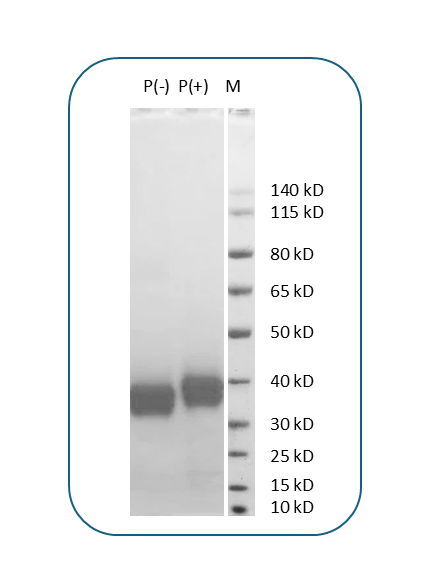
| Molecular Weight | The protein has a predicted molecular weight of 26.8 kDa. Under DTT-reducing conditions, it migrates at approximately 30 kDa on SDS-PAGE. |
| Affinity Tag | C-His |
| Purity | >95% based on SDS-PAGE under reducing condition |
| Regulatory Status | RUO |
| Formulation | 1xPBS buffer, pH7.4, 0.22 µm filtered |
| Endotoxin level | Not tested |
| Protein Concentration | 25µg size is bottled at 0.2mg/mL concentration. 100 µg size is supplied at a lot-specific concentration. |
| Storage and Handling | Briefly centrifuge the vial upon receipt. An unopened vial can be stored at 4°C for up to 2 weeks, or at -20°C or below for up to six months. The protein may be further diluted to 0.1 mg/mL using 0.22 µm-filtered PBS buffer (pH 7.4). For long-term storage, the diluted stock solution should be aliquoted and stored at ≤ –70°C to minimize freeze-thaw cycles. If additional dilution is required, carrier proteins such as FBS or BSA should be added to maintain protein stability. |
Programmed death-1 ligand-1 (PD-L1, CD274, B7-H1) is an immune regulatory protein that interacts with the PD-1 receptor, playing a critical role in controlling immune responses and maintaining peripheral tolerance. Part of the B7 family, PD-L1 contains one V-like and one C-like Ig domain in its extracellular region. By binding to PD-1 on activated T-cells and B-cells, PD-L1 inhibits T-cell activation, promoting apoptosis and cell-cycle arrest, which can suppress ongoing immune responses. This mechanism is implicated in immune evasion by tumors, as PD-L1 helps tumors escape detection by inducing apoptosis in antigen-specific T-cells, contributing to tumor growth. Due to its pivotal role in immune regulation, PD-L1 has emerged as a promising therapeutic target for treating autoimmune diseases and malignancies.
Have a product or application question? Consult our FAQs or contact us.