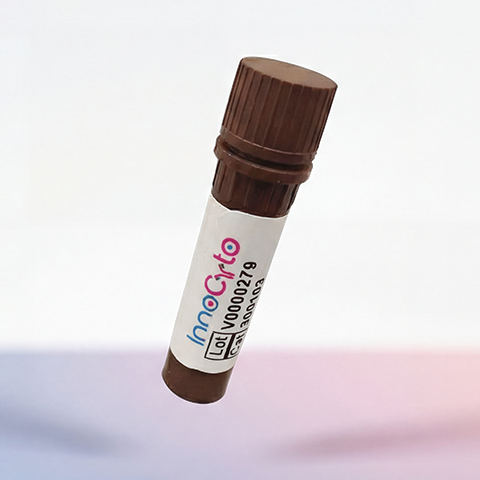
| Cat # | Size | Price | Quantity | |
|---|---|---|---|---|
| 121301 | 100 µg | $95 | ||
| 121302 | 500 µg | $150 |
| Clone | IgDAM2a |
|---|---|
| Application | Flow Cytometry |
| Reactivity | Human |
| Format | Purified |
| Target Name | IgD, immunoglobulin D, Ig delta chain C region |
| Isotype | mouse IgG2a |
| Antibody Type | Monoclonal |
| Regulatory Status | RUO |
| Formulation | Phosphate-buffered solution, pH 7.2, containing 0.09% sodium azide |
| Protein Concentration | 0.5 mg/mL |
| Storage&Handling | The antibody solution should be stored between 2°C and 8°C |
| Recommended Usage | For flow cytometric staining, it is recommended to use less than 0.2 µg of this reagent per 0.5-1.0 million cells in a 100 µL volume. Optimal reagent performance should be determined by titration for each specific application |
| Isotype Controls | 301501 |
| Antibody Family | Human Antibodies |
| Storage & Handling | The antibody solution should be stored between 2°C and 8°C |
| See All Formats | Clone IgDAM2a |
Human immunoglobulin D (IgD) is one of the five major classes of antibodies and plays an important role in B-cell development, activation, and immune regulation. It is predominantly expressed on the surface of mature naïve B lymphocytes, where it functions as part of the B-cell antigen receptor (BCR) complex, together with IgM. IgD helps B cells recognize foreign antigens and initiate immune responses, contributing to the development and regulation of adaptive humoral immunity. A small amount of IgD is also secreted into the circulation and mucosal tissues, where it may participate in immune surveillance and inflammatory responses.
IgD is a glycoprotein composed of two identical heavy chains and two identical light chains, forming a characteristic Y-shaped antibody structure with a molecular mass of approximately 180 kDa. Its heavy chains belong to the delta (δ) subclass and contain one variable domain and three constant domains. The molecule includes two antigen-binding Fab regions and an Fc region responsible for interactions with other immune components. IgD is expressed together with IgM through alternative RNA processing of the immunoglobulin heavy-chain transcript. Its antigen-binding specificity is determined by the variable regions, allowing recognition of a wide range of antigens. Proposed IgD-binding partners include basophil-associated receptors and certain innate immune cell-surface molecules, although its receptor interactions are less well characterized than those of other antibody classes.
IgD is implicated in several immune-related conditions. Elevated serum IgD levels have been observed in hyper-IgD syndrome, certain chronic inflammatory conditions, and some autoimmune diseases. Hyper-IgD syndrome, now commonly classified as mevalonate kinase deficiency, is an autoinflammatory disorder associated with recurrent inflammatory episodes. IgD may also contribute to mucosal immunity and inflammation through interactions with innate immune cells.
Therapeutically, IgD is being investigated as a potential target for modulating B-cell activity and inflammatory responses. Anti-IgD antibodies may help regulate or deplete IgD-expressing B-cell populations, while IgD-based antibodies and Fc-engineering approaches offer opportunities for antibody research and therapeutic development.
Mouse IgG2a Isotype Control Antibody
Have a product or application question? Consult our FAQs or contact us.