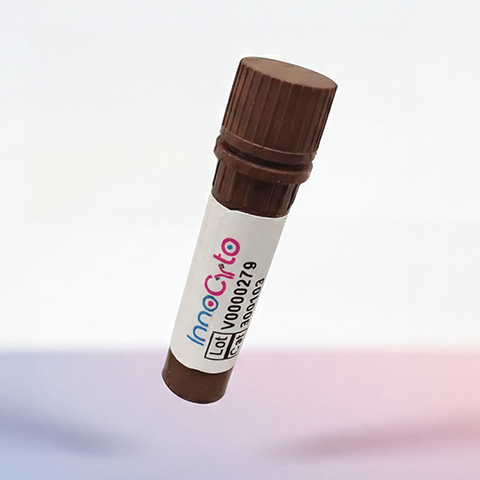
| Cat # | Size | Price | Quantity | |
|---|---|---|---|---|
| 204101 | 100 ug | $90 | ||
| 204102 | 500 ug | $190 |
| Clone | 2B8 |
|---|---|
| Application | Flow Cytometry |
| Reactivity | Mouse |
| Format | Purified |
| Target Name | CD117, CD-117, c-Kit, Stem Cell Factor Receptor (SCFR) |
| Isotype | Rat IgG2b |
| Antibody Type | Monoclonal |
| Regulatory Status | RUO |
| Formulation | Phosphate-buffered solution, pH 7.2, containing 0.09% sodium azide |
| Protein Concentration | 0.5 mg/mL |
| Storage&Handling | The antibody solution should be stored between 2°C and 8°C |
| Research Areas | Hematopoietic Stem cells, Mast cells, Cancer Marker |
| See All Formats | Clone 2B8 |
CD1d is a non-classical antigen-presenting molecule that belongs to the CD1 family of glycoproteins, which are structurally related to major histocompatibility complex (MHC) class I molecules. Unlike classical MHC molecules that present peptide antigens, CD1d specializes in presenting lipid and glycolipid antigens to a unique subset of T cells known as invariant natural killer T (iNKT) cells. CD1d is expressed on a variety of antigen-presenting cells, including dendritic cells, macrophages, B cells, and certain epithelial cells. Through its interaction with NKT cells, CD1d plays an important role in bridging innate and adaptive immunity.
Structurally, CD1d consists of a heavy chain associated with β2-microglobulin, similar to MHC class I molecules. The heavy chain forms a deep hydrophobic binding groove composed of two pockets (commonly referred to as the A′ and F′ pockets) that accommodate the lipid tails of antigens. The hydrophilic head groups of these lipid molecules protrude from the binding groove and are recognized by the T cell receptor (TCR) on NKT cells. This structural configuration enables CD1d to present a wide variety of lipid-based antigens derived from both self and microbial sources.
CD1d binds several classes of lipid ligands. Endogenous ligands include self-glycosphingolipids and phospholipids that help regulate NKT cell homeostasis. Exogenous ligands often originate from microbes, including glycolipids from bacteria such as Sphingomonas species. One of the best-known synthetic ligands is α-galactosylceramide (α-GalCer), originally derived from a marine sponge-associated bacterium. When presented by CD1d, α-GalCer strongly activates iNKT cells, leading to rapid production of cytokines such as interferon-γ and interleukin-4.
Through activation of NKT cells, CD1d plays a role in numerous immune-mediated conditions. It has been implicated in cancer immunity, infectious diseases, autoimmune disorders, and inflammatory diseases. In cancer, CD1d-mediated activation of NKT cells can enhance anti-tumor immune responses by stimulating cytotoxic lymphocytes and promoting cytokine release. Conversely, dysregulated CD1d–NKT interactions may contribute to autoimmune diseases such as type 1 diabetes, inflammatory bowel disease, and systemic lupus erythematosus.
Because of its central role in regulating NKT cell responses, CD1d has become an attractive therapeutic target. Strategies under investigation include lipid-based agonists that activate NKT cells to boost anti-tumor immunity, modified glycolipid ligands designed to bias cytokine responses, and antibody-based approaches that modulate CD1d function. In addition, CD1d-restricted antigen presentation is being explored in vaccine design and immunotherapy platforms aimed at harnessing the rapid immunoregulatory properties of NKT cells. These approaches highlight CD1d as an important molecule at the intersection of lipid antigen presentation and immune modulation.
Mouse I-A and I-E are the classical major histocompatibility complex (MHC) class II molecules in mice. They are encoded within the murine MHC locus, also known as the H-2 complex, and function as key antigen-presenting molecules in the adaptive immune system. These proteins are primarily expressed on professional antigen-presenting cells such as dendritic cells, macrophages, and B cells, although they can also be induced on other cell types during inflammation. Their primary role is to present processed extracellular peptide antigens to CD4+ T helper cells, thereby initiating and regulating immune responses against pathogens and other foreign antigens.
Structurally, I-A and I-E molecules are heterodimeric glycoproteins composed of an α chain and a β chain. Each chain contains two extracellular domains, a transmembrane region, and a short cytoplasmic tail. The peptide-binding groove is formed by the α1 and β1 domains and is open at both ends, allowing it to accommodate peptides typically 12–20 amino acids in length. This open structure distinguishes MHC class II molecules from class I molecules and permits binding of longer peptides with flexible extensions beyond the groove. Genetic polymorphisms in both the α and β chains influence peptide binding specificity and contribute to differences in immune responses between mouse strains.
The ligands presented by I-A and I-E are primarily peptides derived from extracellular proteins that have been internalized by antigen-presenting cells through endocytosis or phagocytosis. These proteins are processed within endosomal and lysosomal compartments into peptide fragments, which are then loaded onto MHC class II molecules with the help of accessory molecules such as the invariant chain and H-2M. The resulting peptide–MHC complexes are transported to the cell surface, where they are recognized by the T cell receptor (TCR) on CD4+ T cells, leading to T cell activation and cytokine production.
Mouse I-A and I-E molecules play important roles in susceptibility to autoimmune and inflammatory diseases in experimental models. Certain MHC class II haplotypes are associated with conditions such as experimental autoimmune encephalomyelitis (a model for multiple sclerosis), collagen-induced arthritis, and type 1 diabetes in non-obese diabetic (NOD) mice. Differences in peptide presentation can influence the activation of autoreactive T cells and thus determine disease susceptibility or resistance.
Because of their central role in antigen presentation, I-A and I-E molecules are important in immunological research and therapeutic development. They are widely used in mouse models to study T cell responses, vaccine mechanisms, and autoimmune pathogenesis. In therapeutic contexts, strategies that alter peptide presentation or modulate CD4+ T cell activation—such as peptide-based tolerizing vaccines or antigen-specific immunotherapies—often rely on understanding how peptides interact with MHC class II molecules like I-A and I-E. As a result, these molecules remain fundamental tools for studying immune regulation and designing new immunotherapies.
Mouse CD117, also known as c-Kit, is a receptor tyrosine kinase that plays a critical role in the regulation of hematopoiesis, stem cell maintenance, and the development of several specialized cell types. CD117 is encoded by the Kit gene and is expressed on hematopoietic stem and progenitor cells, mast cells, melanocytes, germ cells, and certain progenitors in multiple tissues. In the immune system, CD117 is particularly well known as a marker of mast cells and early hematopoietic stem cells, where it regulates cell survival, proliferation, and differentiation.
Structurally, CD117 is a transmembrane glycoprotein belonging to the type III receptor tyrosine kinase family, which also includes receptors such as FLT3 and PDGFR. The receptor consists of an extracellular domain containing five immunoglobulin-like domains responsible for ligand binding, a single transmembrane region, and a cytoplasmic domain with intrinsic tyrosine kinase activity. Upon ligand binding, CD117 undergoes receptor dimerization, which triggers autophosphorylation of specific tyrosine residues within the intracellular domain. These phosphorylated sites then recruit signaling molecules that activate downstream pathways, including the PI3K–AKT, MAPK, and JAK/STAT signaling cascades.
The primary ligand for CD117 is stem cell factor (SCF), also known as Kit ligand or steel factor. SCF exists in both membrane-bound and soluble forms and is produced by stromal cells in the bone marrow and other tissues. Binding of SCF to CD117 promotes survival and expansion of hematopoietic stem cells, supports mast cell development, and contributes to the migration and differentiation of various progenitor cell populations. Because of this central signaling pathway, the SCF–CD117 axis is essential for normal blood cell formation and tissue homeostasis.
CD117 is also implicated in several diseases. Gain-of-function mutations in the Kit gene can lead to constitutive activation of the receptor and uncontrolled cellular proliferation. In mice and humans, such mutations are associated with disorders including mastocytosis, gastrointestinal stromal tumors (GIST), and certain leukemias. Conversely, loss-of-function mutations in Kit can disrupt hematopoiesis, pigmentation, and fertility, reflecting the broad biological roles of CD117 signaling.
Because of its involvement in cancer and stem cell biology, CD117 has become an important therapeutic target. Small-molecule tyrosine kinase inhibitors that block CD117 signaling, such as imatinib, have shown significant clinical benefit in diseases driven by KIT activation, particularly GIST. In research and experimental therapy, antibodies against CD117 are also used to identify and isolate hematopoietic stem cells and to condition recipients for stem cell transplantation by selectively depleting stem cell niches. These strategies highlight the importance of CD117 as both a biological marker and a therapeutic target in hematology and oncology.
Rat IgG2b Isotype Control Antibody
Anti-mouse CD117 (c-Kit) Antibody TDS
iF647 Anti-Mouse CD172a Antibody, Clone P84
Have a product or application question? Consult our FAQs or contact us.