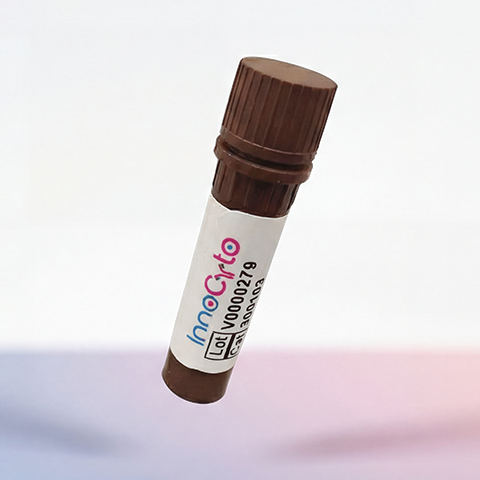
| Cat # | Size | Price | Quantity | |
|---|---|---|---|---|
| 570601 | 1 mg | $250 | ||
| 570602 | 5 mg | $650 | ||
| 570603 | 25 mg | $1850 |
| Clone | 1D11.16.8 |
|---|---|
| Application | Direct ELISA, functional assay, Flow Cytometry |
| Reactivity | mouse/human/rat/monkey/hamster/canine/bovine |
| Format | Liquid |
| Target Name | TGF-β, Transforming growth factor-beta 1, TGFB1, CED |
| Isotype | Mouse IgG1, κ |
| Antibody Type | Recombinant |
| Regulatory Status | RUO |
| Formulation | 0.2 μM filtered solution of 1x PBS. |
| Endotoxin Level | Less than 1 EU/mg of protein as determined by LAL method. |
| See All Formats | Clone 1D11.16.8 |
Transforming growth factor-beta 1 (TGF-β1) is a multifunctional cytokine belonging to the TGF-β superfamily. It regulates cell proliferation, differentiation, migration, extracellular-matrix production, tissue repair, and immune responses. TGF-β1 is particularly important for maintaining tissue homeostasis and controlling inflammation, while excessive or persistent signaling can promote fibrosis and immune suppression.
Human TGF-β1 is synthesized as a precursor containing a signal peptide, latency-associated peptide (LAP), and mature cytokine region. Following processing, the mature protein forms a disulfide-linked homodimer of approximately 25 kDa. TGF-β1 is commonly secreted in a latent complex in which the mature dimer remains associated with LAP and latent TGF-β-binding proteins; activation releases the mature cytokine so that it can interact with its receptors.
TGF-β1 primarily signals through the type II and type I TGF-β receptors (TGFBR2 and TGFBR1), which are serine/threonine kinase receptors. Receptor activation initiates canonical SMAD2/3 signaling as well as noncanonical pathways. TGF-β1 does not have a conventional “ligand” separate from itself; rather, it is the ligand for this receptor system. Accessory proteins such as betaglycan can modulate ligand presentation and signaling.
Dysregulated TGF-β1 signaling is associated with numerous diseases, including pulmonary and other fibrotic disorders, inflammatory diseases, cancer, and certain genetic disorders. In cancer, TGF-β1 can suppress tumor growth at early stages but promote immune evasion, epithelial-mesenchymal transition, invasion, and tumor progression at later stages. Therapeutic strategies therefore include TGF-β-neutralizing antibodies, ligand traps, and inhibitors of TGF-β receptor signaling.
In Vivo Star Anti-mouse/human/rat/monkey/hamster/canine/bovine TGF-β Antibody TDS
Have a product or application question? Consult our FAQs or contact us.