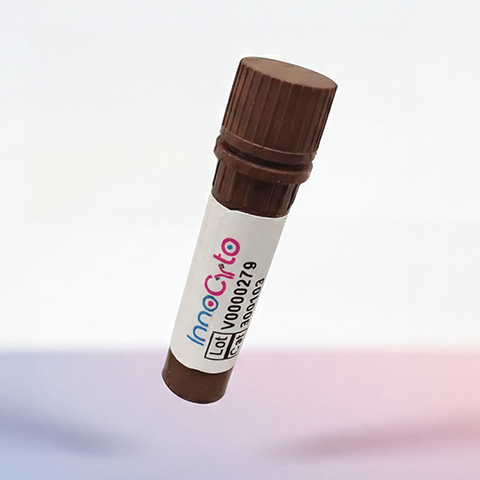
| Cat # | Size | Price | Quantity | |
|---|---|---|---|---|
| 631201 | 100 µg | $80 | ||
| 631202 | 1 mg | $250 |
| Application | Bioassay |
|---|---|
| Format | Lyophilized from sterile 30% Acetonitrile, 0.1% TFA |
| Expression Host | E.coli |
| Target Name | IGF1, Insulin-like growth factor I, somatomedin C, Nonsuppressibleinsulin-like activity I (NSILA-I), Insulin-Like Growth Factor IB, IBP1 |
| Species | Human |
| accession number | P05019-1 |
| Sources | A DNA sequence encoding the human IGF1 (P05019-1) (Gly49-Ala118) was expressed. |
| Molecular Weight | The recombinant human IGF1 consists of 71 amino acids and has a calculated molecular mass of 7.8 KDa. |
| Affinity Tag | None |
| Purity | ≥ 95 % as determined by SDS-PAGE. ≥ 95 % as determined by SEC-HPLC. |
| Regulatory Status | RUO |
| Endotoxin level | <0.01EU per μg protein |
| Protein Concentration | Lyophilized |
| Storage and Handling | Proteins are stable for up to twelve months from date of receipt at -20℃ to -80℃. Store it under sterile conditions at -20℃ to -80℃. It is recommended that the protein be aliquoted for optimal storage. Avoid repeated freeze-thaw cycles. |
| Research Areas | Cell Growth, Metabolism |
Human insulin-like growth factor 1 (IGF-1) is a peptide hormone that plays a central role in growth, development, and tissue repair. It is primarily produced by the liver in response to growth hormone stimulation, but it is also synthesized locally in many tissues where it acts in an autocrine and paracrine manner. IGF-1 is essential for postnatal growth, skeletal muscle development, and the regulation of metabolism, and it promotes cell proliferation while inhibiting apoptosis in a wide range of cell types.
Structurally, IGF-1 is a single-chain polypeptide of 70 amino acids with a three-dimensional fold similar to proinsulin, reflecting their evolutionary relationship. It contains disulfide bonds that stabilize its compact structure and allow high-affinity receptor binding. IGF-1 primarily signals through the insulin-like growth factor 1 receptor (IGF1R), a receptor tyrosine kinase that is closely related to the insulin receptor. Upon ligand binding, IGF1R activates downstream signaling pathways including PI3K/AKT and MAPK, which regulate growth, survival, and differentiation. IGF-1 also binds with high affinity to IGF-binding proteins (IGFBPs), which modulate its bioavailability and extend its half-life in circulation.
Dysregulation of IGF-1 signaling is implicated in multiple diseases. Excessive IGF-1 activity is associated with cancer progression due to enhanced cell survival and proliferation, while low levels contribute to growth failure and metabolic disorders. IGF-1 has therapeutic applications in treating growth hormone insensitivity and certain growth deficiencies. Conversely, IGF1R inhibitors and pathway modulators are being investigated as anticancer strategies to limit tumor growth driven by IGF-1 signaling.
Recombinant human IGF1 Protein TDS
Have a product or application question? Consult our FAQs or contact us.