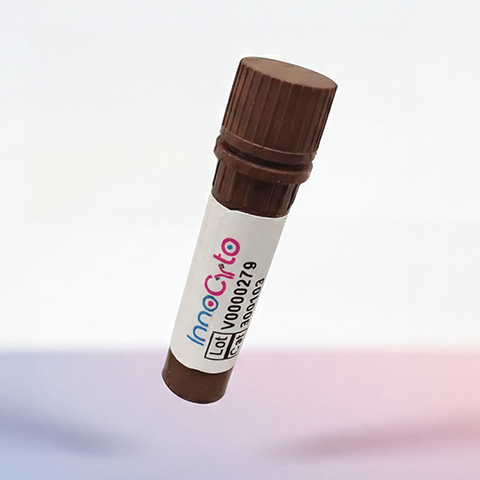
| Cat # | Size | Price | Quantity | |
|---|---|---|---|---|
| 630301 | 20 µg | $300 | ||
| 630302 | 100 µg | $625 |
| Application | Bioassay |
|---|---|
| Format | Lyophilized from sterile PBS, pH 7.4. |
| Expression Host | E.coli |
| Target Name | SCF, Stem cell factor, mast cell grow factor (MGF), KIT-ligand |
| Species | Human |
| accession number | NP_000890.1 |
| Sources | A DNA sequence encoding the human KITLG (NP_000890.1) (Glu26-Ala189) was expressed with an N-terminal Met. |
| Molecular Weight | The recombinant Human KITLG consists of 165 amino acids and predicts a molecular mass of 18.6 kDa. The molecular weight of this protein is around 37.4 kDa verified by SEC-MALS(Routinely tested). |
| Affinity Tag | None |
| Purity | ≥ 95 % as determined by SDS-PAGE. ≥ 95 % as determined by SEC-HPLC. ≥ 95 % as determined by SEC-MALS(Routinely tested). |
| Regulatory Status | RUO |
| Endotoxin level | <0.01EU per μg protein |
| Protein Concentration | Lyophilized |
| Storage and Handling | Proteins are stable for up to twelve months from date of receipt at -20℃ to -80℃. Store it under sterile conditions at -20℃ to -80℃. It is recommended that the protein be aliquoted for optimal storage. Avoid repeated freeze-thaw cycles. |
| Research Areas | Hematopoiesis, Hematopoietic Stem cells |
Human stem cell factor (SCF), also known as KIT ligand, is a critical cytokine that regulates hematopoiesis, stem cell maintenance, and mast cell development. It is produced by stromal cells, fibroblasts, and endothelial cells, and plays an essential role in supporting the survival, proliferation, and differentiation of hematopoietic stem and progenitor cells. SCF is particularly important for melanocyte development, germ cell formation, and mast cell function, highlighting its broad biological impact beyond the immune system.
Structurally, SCF exists in both membrane-bound and soluble forms generated through alternative splicing and proteolytic cleavage. It is a homodimeric protein that binds to its receptor, c-KIT (CD117), a type III receptor tyrosine kinase. Upon ligand binding, c-KIT dimerizes and undergoes autophosphorylation, triggering downstream signaling pathways such as PI3K/AKT, MAPK, and JAK/STAT. SCF does not have multiple classical ligands; rather, it functions as the primary ligand for the c-KIT receptor.
Dysregulation of the SCF/c-KIT axis is implicated in various diseases, including cancers such as gastrointestinal stromal tumors (GIST), melanoma, and certain leukemias, often due to activating mutations in c-KIT. Additionally, abnormal SCF signaling contributes to mast cell–mediated disorders like asthma and mastocytosis. Therapeutically, targeting c-KIT with tyrosine kinase inhibitors has proven effective in treating SCF-driven malignancies. Conversely, recombinant SCF has been explored to enhance hematopoietic recovery following bone marrow transplantation and chemotherapy.
Recombinant Human SCF Protein TDS
Have a product or application question? Consult our FAQs or contact us.