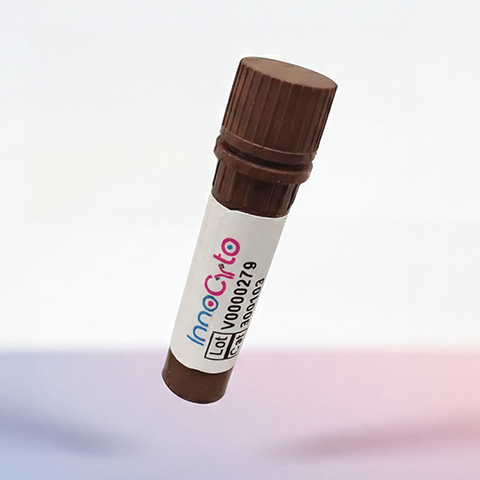
| Cat # | Size | Price | Quantity | |
|---|---|---|---|---|
| 670001 | 20 μg | $120 | ||
| 670002 | 100 μg | $450 |
| Application | Bioassay |
|---|---|
| Format | Lyophilized from sterile PBS, pH 7.4. |
| Expression Host | HEK293 |
| Target Name | MCSF, CSF1, CSF-1 |
| Species | Mouse |
| accession number | P07141-1 |
| Sources | A DNA sequence encoding the mouse CSF1 (P07141-1) (Lys 33-Glu262) was expressed. |
| Molecular Weight | The recombinant mouse CSF1 comprises 230 amino acids and has a predicted molecular mass of 26 kDa. The apparent molecular mass of the protein is approximately 44 kDa in SDS-PAGE under reducing conditions due to glycosylation. |
| Affinity Tag | None |
| Purity | ≥ 95 % as determined by SDS-PAGE, ≥ 95 % as determined by SEC-HPLC, ≥ 95% as determined by SEC-MALS(Routinely tested). |
| Regulatory Status | RUO |
| Endotoxin level | <0.01EU per μg protein |
| Protein Concentration | Lyophilized |
| Storage and Handling | Proteins are stable for up to twelve months from date of receipt at -20℃ to -80℃. Store it under sterile conditions at -20℃ to -80℃. It is recommended that the protein be aliquoted for optimal storage. Avoid repeated freeze-thaw cycles. |
| Research Areas | Cytokines, Monocytes, Activated Macrophages, Endothelial cells, Neurons, Cancer Marker |
Mouse macrophage colony-stimulating factor (M-CSF, also known as CSF-1) is a hematopoietic growth factor that regulates the survival, proliferation, and differentiation of mononuclear phagocyte lineage cells, including monocytes, macrophages, and osteoclasts. It is essential for normal immune system development and tissue homeostasis, particularly in the regulation of innate immune responses and bone remodeling. In mice, M-CSF is broadly expressed by stromal cells, fibroblasts, endothelial cells, and activated immune cells, acting in both paracrine and endocrine manners to support macrophage lineage commitment from bone marrow progenitors.
M-CSF is a secreted homodimeric glycoprotein that belongs to the type IV cytokine family. It signals primarily through the CSF1 receptor (CSF1R), a class III receptor tyrosine kinase expressed on monocytes, macrophages, and related progenitors. Ligand binding induces receptor dimerization and autophosphorylation, activating downstream signaling pathways such as PI3K/AKT, MAPK/ERK, and JAK/STAT, which collectively regulate cell survival, proliferation, and differentiation. Alternative ligands include IL-34, which also binds CSF1R but with distinct tissue distribution and functional nuances.
M-CSF signaling contributes to several disease processes, including cancer progression, where tumor-associated macrophages are promoted, as well as inflammatory and autoimmune diseases through excessive macrophage activation.
M-CSF/CSF1R axis is a therapeutic target in oncology and inflammatory disorders. CSF1R inhibitors and neutralizing antibodies aim to reduce tumor-associated macrophage survival and reprogram the tumor microenvironment, while recombinant M-CSF has been explored for enhancing hematopoietic recovery and immune reconstitution after chemotherapy.
Recombinant Mouse M-CSF Protein TDS
Have a product or application question? Consult our FAQs or contact us.